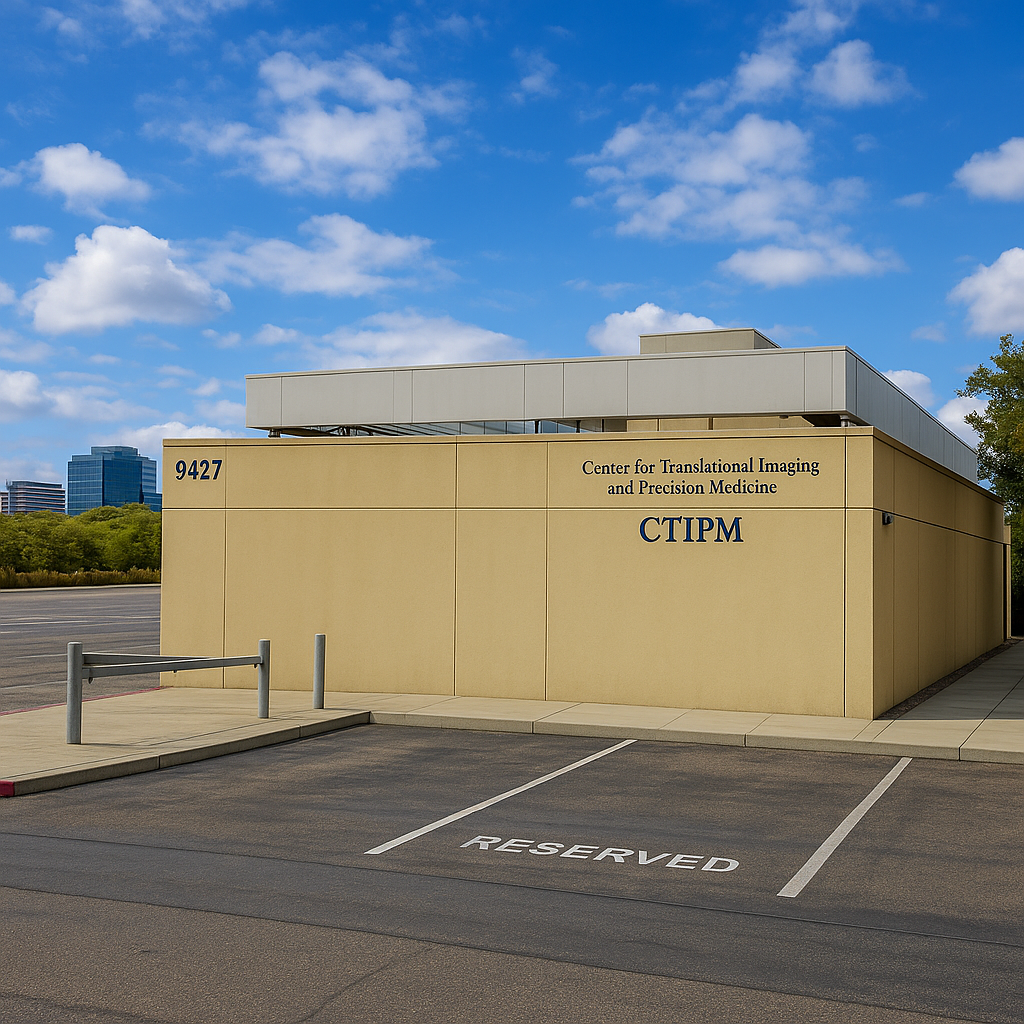
Who we are and what we do
next-generation technologies in medical imaging and analysis"Seeing" inside the human body is a vital part of modern medicine, and magnetic resonance imaging (MRI) is a powerful tool for detecting, characterizing and tracking diseases such as breast and prostate cancer, heart disease and neurodegenerative illnesses such as Alzheimer's. MR imaging also helps physicians assess musculoskeletal disorders such as rheumatoid arthritis and carpal tunnel syndrome, as well as injuries to the bones and joints.Here at the Center for Translational Imaging (CTI) at the University of California San Diego, we offer physicians and their patients the latest technology, scanning techniques and analysis available in MR imaging - a noninvasive, safe and powerful tool for medical diagnosis and prognosis that doesn't rely on radiation or X-rays.
The ACR accredited Center was established in 2015 to make world-class breakthroughs in magnetic resonance physics directly available to physicians and their patients. This direct link between research and the clinic means that physicians can use the very latest tools for medical imaging, which are not yet available anywhere else but UCSD. For cancer patients, for example, it could mean more definitive detection, more precise localization of tumors, and more confident assessments of the grade of cancer that patients confront.
Physicians and their patients who come to the Center will find an interdisciplinary environment that joins UCSD departments of Radiology, Neurosciences, Psychiatry, Neurosurgery, Urology, Radiation Oncology, and Medicine. Professionals ranging from basic neuroscientists, clinicians, physicists and computer scientists bring distinct talents but share common goals: developing and experimentally validating new technologies, applying these new technologies to study human disease, and developing computational frameworks that join microscopic and macroscopic levels of description.The Center for Translational Imaging for Precision Medicine, which includes a state of the art imaging facility, is dedicated to clinical and translational research.